

Mount Kilimanjaro stands as one of the world’s most achievable yet profoundly rewarding mountaineering challenges. Each year, tens of thousands of adventurers from every continent attempt to climb Mount Kilimanjaro, drawn by the magnetic appeal of reaching 5,895 meters without requiring technical climbing skills, ice axes, or crampons. Yet beneath this accessibility lies genuine challenge—altitude, weather extremes, physical endurance, and mental determination all conspire to test every climber who sets foot on Africa’s highest peak. This guide provides the essential knowledge, practical strategies, and insider wisdom needed to transform your Kilimanjaro aspiration into summit success.
Why Mount Kilimanjaro Captivates Global Adventurers
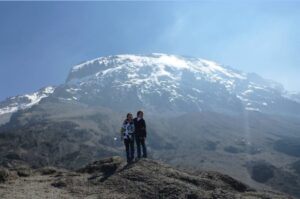
Mount Kilimanjaro occupies a unique position in global mountaineering consciousness. Unlike the Himalayas where peaks cluster together, or mountain ranges where summits form connected chains, Kilimanjaro rises in magnificent isolation from the East African savanna. This freestanding prominence creates visual drama—on clear days, the snow-capped summit appears to float above the clouds, visible from Kenya and throughout northern Tanzania.
The mountain’s accessibility makes it special. While climbing Denali requires technical skills, advanced equipment, and glacier travel expertise, and while Everest Base Camp demands weeks of trekking, Kilimanjaro offers high-altitude achievement within one week’s vacation time. This democratic approach to mountaineering opens summit experiences to teachers, accountants, retirees, and students—ordinary people seeking extraordinary accomplishment.
Yet Kilimanjaro demands respect. The 5,895-meter summit elevation places you firmly in extreme altitude territory where oxygen levels drop to 50% of sea level concentrations. The climb requires no technical skills, but testing your body and mind through multi-day trekking, dramatic temperature swings, and altitude effects creates genuine challenge. Success rates hovering around 65% overall prove the mountain refuses to surrender its summit easily.
When you climb Mount Kilimanjaro, you join an illustrious tradition. Hans Meyer and Ludwig Purtscheller first reached Uhuru Peak in 1889 after multiple attempts. Since then, everyone from elderly climbers to young children, from Olympic athletes to cancer survivors, have tested themselves against this legendary peak. Each summit represents personal victory over doubt, discomfort, and the temptation to quit.
Decoding Kilimanjaro’s Climate Zones
One of Kilimanjaro’s most fascinating features is the remarkable climate diversity encountered during your ascent. Understanding these zones helps you prepare mentally and physically for the dramatic environmental changes ahead.
Cultivation Zone (800-1,800 meters): Your journey begins in fertile farmlands where local communities cultivate coffee, maize, and bananas on rich volcanic soil. This productive agricultural belt demonstrates how volcanic activity enriched the ecosystem while creating livelihoods for thousands of families.
Rainforest Zone (1,800-2,800 meters): Entering Kilimanjaro National Park, you’re immediately enveloped in dense, humid rainforest. Massive trees draped with mosses and lichens create a primordial atmosphere. Black and white colobus monkeys leap through canopy branches while blue monkeys forage on the forest floor. Birds including silvery-cheeked hornbills and turacos provide a constant soundtrack. Expect muddy trails, potential rain, and 100% humidity making this zone challenging despite moderate elevation.
Heather and Moorland Zone (2,800-4,000 meters): As you climb higher, forest yields to open moorland dominated by giant heathers, ericas, and the distinctive Kilimanjaro tree groundsel. These otherworldly plants, found only on East African mountains, evolved unique adaptations to extreme temperature fluctuations and intense ultraviolet radiation. The landscape opens dramatically, providing first panoramic views of surrounding peaks and distant plains.
Alpine Desert Zone (4,000-5,000 meters): Vegetation becomes sparse in this harsh environment where temperature swings exceed 40°C between day and night. Only hardy lichens and occasional grasses survive. Volcanic rocks dominate the landscape—dark lava formations, lighter pumice, and weathered scree create an alien moonscape. Water becomes scarce, air grows noticeably thin, and the summit finally appears tantalizingly close yet still far above.
Arctic Summit Zone (5,000-5,895 meters): The final push enters permanent ice and snow fields despite equatorial location. Glaciers clinging to summit slopes represent remnants of much larger ice caps that once covered Kilimanjaro’s entire peak. Temperatures plunge below -20°C, winds howl across exposed ridges, and oxygen scarcity makes every step laborious. This arctic environment at the equator creates surreal conditions unlike anything most climbers have experienced.
Strategic Route Analysis: Matching Paths to Priorities
Selecting the optimal route represents one of your most important Kilimanjaro decisions. Each path presents distinct characteristics affecting your experience, success probability, and satisfaction.
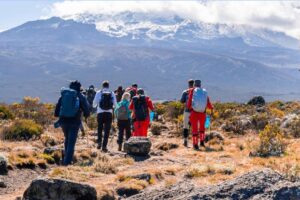
Machame Route dominates Kilimanjaro traffic for compelling reasons. The six to seven-day itinerary balances duration with acclimatization effectiveness, achieving 80-85% success rates. Scenic highlights include Shira Plateau’s expansive moorland, the thrilling Barranco Wall scramble, and varied ecological zones. While popular routes mean company and crowded camps, they also provide safety through numbers and well-maintained trails. Machame suits first-time high-altitude trekkers seeking proven success combined with spectacular scenery.
Lemosho Route delivers Kilimanjaro’s finest wilderness experience through its remote western approach. Seven to eight days provide excellent acclimatization while lower initial traffic creates intimate mountain experiences. The route merges with Machame at Lava Tower, combining solitude with safety. Success rates consistently exceed 90%, justifying premium pricing. Lemosho suits those prioritizing experience quality, willing to invest extra budget for superior acclimatization and reduced crowds.
Northern Circuit represents the ultimate Kilimanjaro experience for climbers with flexible schedules and adequate budgets. Eight to nine days circumnavigating the mountain provides unmatched acclimatization, explaining success rates approaching 95%. You experience Kilimanjaro from every angle—south, west, north, and east—each perspective revealing a different character. Extended duration and premium pricing limit traffic, ensuring peaceful trekking. Choose the Northern Circuit when maximizing summit probability justifies extra investment.
Rongai Route approaches from drier northern slopes, making it ideal for rainy season attempts. This seven-day trek follows gradual gradients through quiet wilderness, appealing to those seeking contemplative journeys rather than social trekking. However, Rongai’s acclimatization profile doesn’t match western routes, and scenery lacks the dramatic variety of Machame or Lemosho. Success rates hover around 75-80%. Select Rongai for April-May climbs or when preferring gentler gradients with minimal crowds.
Umbwe Route challenges experienced trekkers through the steepest, most direct ascent. Six days of aggressive climbing through pristine forest followed by exposed ridges attracts those seeking maximum challenge and solitude. However, rapid elevation gain compromises acclimatization, resulting in 60-70% success rates. Only confident, experienced high-altitude trekkers should consider Umbwe.
Marangu Route offers unique hut accommodations replacing camping, attracting those preferring beds over tents. As Kilimanjaro’s oldest established route, infrastructure is well-developed with reliable facilities. Unfortunately, typical five to six-day itineraries provide insufficient acclimatization, explaining disappointing 60-65% success rates. Extended seven-day Marangu itineraries incorporating acclimatization days improve odds substantially. Choose Marangu only with seven-day schedules or when camping is absolutely unacceptable.
Comprehensive Training Blueprint
Successfully climbing Mount Kilimanjaro requires dedicated physical preparation transforming your body into an efficient altitude machine. Launch your training program four to six months before departure, following structured progression building capacity without risking injury.
Cardiovascular Foundation (Months 1-2): Establish aerobic base through 45-60 minutes of moderate-intensity exercise five to six days weekly. Activities include hiking, running, cycling, swimming, or rowing—variety prevents boredom while building comprehensive fitness. Maintain conversational pace where you can talk but not sing. This phase develops cardiovascular efficiency, strengthens heart and lungs, and builds work capacity foundation.
Progressive Intensity (Months 3-4): Increase training volume and intensity systematically. Extend weekend hikes to four to six hours, incorporating elevation gain whenever geography permits. Add interval training one to two days weekly—alternate three-minute hard efforts with three-minute recovery periods for 30-40 minutes total. Begin weighted pack training with 5 kilograms, increasing gradually to 7-8 kilograms. This phase builds specific endurance and strength for sustained mountain trekking.
Peak Conditioning (Months 5-6, weeks 1-3): Reach maximum training volume with eight-hour weekend hikes simulating summit day demands. Incorporate back-to-back training days (hike Saturday, hike Sunday) replicating consecutive trekking days. Continue midweek training with one interval session, two moderate endurance sessions, and two strength sessions. This peak phase maximizes fitness while testing your body’s capacity for sustained effort.
Taper and Recovery (Final 2-3 weeks): Reduce training volume by 40-50% while maintaining intensity. Allow accumulated fatigue to dissipate while preserving hard-earned fitness. This tapering ensures you arrive at Kilimanjaro fresh rather than exhausted. Final week should include only light activity—easy walks, gentle stretching, adequate sleep.
Strength Training Throughout: Maintain consistent strength work twice weekly focusing on functional movements. Squats and lunges build quadriceps and glutes powering uphill climbing. Step-ups with dumbbells strengthen climbing-specific muscles. Romanian deadlifts develop hamstrings and lower back. Planks, side planks, and anti-rotation exercises build core stability maintaining posture under load. Calf raises strengthen lower legs preventing shin splints. Training these muscle groups prevents injury while improving climbing efficiency.
Downhill Technique Practice: Dedicated downhill training prevents the most common trekking injuries. Practice descending with trekking poles, landing mid-foot rather than heel-striking, keeping knees slightly bent, absorbing impact, using poles to distribute forces away from knees. Strong eccentric muscle control (lengthening under tension) prevents the burning quad sensation making descents miserable.
The Science of Altitude Acclimatization
Understanding altitude physiology empowers you to make intelligent decisions maximizing summit success when you climb Mount Kilimanjaro. Altitude affects every physiological system, and proper adaptation requires specific strategies.
As you ascend, atmospheric pressure decreases proportionally. At sea level, each breath delivers abundant oxygen through 101 kPa pressure. At 3,000 meters, pressure drops to 70 kPa—30% less oxygen per breath. At Uhuru Peak’s 5,895 meters, pressure plummets to 48 kPa—each breath provides only 47% as much oxygen as at sea level.
Your body compensates through acute and chronic adaptations. Immediately, breathing deepens and accelerates, delivering more oxygen despite reduced pressure. Heart rate increases, pumping oxygen-depleted blood faster. Over days, your body produces more red blood cells carrying oxygen, increases capillary density improving tissue oxygen delivery, and modifies cellular metabolism extracting more energy from available oxygen.
These adaptations require time—rushing altitude gain overwhelms adaptive capacity, triggering altitude sickness. Mild Acute Mountain Sickness (AMS) produces headache, nausea, dizziness, fatigue, and sleep disturbance affecting 75% of Kilimanjaro climbers at some elevation. These symptoms resolve with rest, hydration, and slower ascent. Continuing upward despite worsening symptoms risks severe altitude illness—High Altitude Pulmonary Edema (HAPE) filling lungs with fluid, or High Altitude Cerebral Edema (HACE) causing dangerous brain swelling. Both require immediate descent as the only reliable treatment.
Acclimatization Strategies for Success:
Ascend Slowly: Follow the golden rule—climb no faster than 300-500 meters per day above 3,000 meters, with rest days every 1,000 meters. Longer routes providing gradual ascent consistently achieve higher success rates.
Climb High, Sleep Low: Daily hikes ascending to higher elevations before returning to lower camps for sleeping accelerate adaptation through controlled exposure followed by recovery.
Hydration Protocol: Drink three to four liters daily despite reduced thirst sensation at altitude. Dehydration thickens blood, impairs oxygen transport, and increases altitude sickness risk. Monitor urine color—pale yellow indicates adequate hydration.
Carbohydrate-Rich Nutrition: Your body metabolizes carbohydrates most efficiently using limited oxygen at altitude. Prioritize pasta, rice, potatoes, bread, and simple sugars despite potential appetite loss.
Sleep Quality: Altitude disrupts sleep through periodic breathing—irregular breathing patterns including temporary pauses. Sleeping with head elevated helps. Accept imperfect sleep as normal at altitude rather than stressing about it.
Consider Diamox: Acetazolamide (Diamox) accelerates acclimatization by stimulating breathing and reducing fluid retention. Consult altitude-experienced physicians to determine if Diamox suits your circumstances. Trial it weeks before departure to identify potential side effects.
Monitor Symptoms Honestly: Communicate all symptoms to guides accurately. Minimizing symptoms through pride or fear of descent endangers yourself and potentially your group. Guides make better decisions with complete information.
Critical Gear Selections
Appropriate equipment dramatically impacts your comfort, safety, and summit probability. Kilimanjaro’s extreme conditions—from tropical humidity to arctic cold—demand carefully selected, quality gear.
Sleep System Essentials: Four-season sleeping bags rated to -15°C minimum prove essential, with -20°C rating providing extra security. Down insulation offers superior warmth-to-weight ratios while compressing small, though it loses insulation when wet. Synthetic insulation maintains warmth in damp conditions—important in rainforest camps—though it’s bulkier and heavier. Sleeping bag liners add 5-10°C warmth while keeping bags clean. Sleeping pads with R-values exceeding 4.0 insulate you from frozen ground preventing conductive heat loss.
Layering System Strategy: Three-layer systems provide temperature regulation flexibility. Base layers (merino wool or synthetic fabrics—never cotton) wick moisture while providing light insulation. Mid-layers (fleece or lightweight down jackets) trap warm air providing primary insulation. Shell layers (waterproof-breathable jackets and pants) block wind and precipitation while allowing vapor escape. Bring multiple base and mid-layers allowing daily rotation while others dry.
Summit Night Specialization: The final push demands heavyweight insulation—thick down or synthetic jackets, insulated pants worn over regular trekking pants, expedition-weight gloves with waterproof shells plus liner gloves, warm hat, full-coverage balaclava, and chemical hand/toe warmers for emergency use. These items stay packed until summit night but prove absolutely essential then.
Footwear Foundation: Well-broken-in, waterproof hiking boots with Gore-Tex or equivalent membranes and adequate ankle support form your foundation. Break boots in thoroughly during training to prevent blisters. Bring both liner socks (thin, moisture-wicking) and outer socks (thick, cushioned) for proper fit and blister prevention. Gaiters prevent scree, mud, and moisture from entering boots. Lightweight camp shoes or sandals provide evening relief allowing boots to dry overnight.
Trekking Pole Benefits: Quality adjustable trekking poles reduce knee impact forces by 25% during descents while providing stability on uneven terrain, balance during stream crossings, and support during steep ascents. Carbon fiber poles offer light weight; aluminum poles provide durability and lower cost. Ensure proper length adjustment—elbows should form 90-degree angles with poles planted.
Summit Night: The Ultimate Test
Summit night represents Kilimanjaro’s defining challenge—the moment where preparation, determination, and mountain conditions converge determining who reaches Uhuru Peak. Understanding what awaits helps you prepare both physically and mentally.
Wake-up calls arrive around 11:00 PM with hot tea and light snacks. You dress in all available layers—base, mid, insulation, shell—while porter crews prepare for departure. By midnight, headlamps illuminate the trail as your group begins the six to eight-hour summit push.
The route follows steep switchbacks gaining 1,200 vertical meters through loose volcanic scree. Each step forward slides partially backward, creating frustrating inefficiency. Temperature plunges to -10 to -25°C with brutal wind chill. Exhaustion accumulates as sleep deprivation compounds altitude effects. Oxygen scarcity makes breathing labored—you pant heavily despite moving slowly.
Mental challenges intensify as hours pass. Darkness prevents seeing the summit, creating the illusion of endless climbing. Cold penetrates every layer. Doubt whispers constantly: “Turn back. You’ve proven enough. The summit isn’t worth this suffering.” Many climbers experience emotional breakdowns during summit night—tears, despair, overwhelming desire to quit.
Successful climbers employ mental strategies: breaking the route into tiny segments (focus on the next 10 steps, not the distant summit), maintaining positive self-talk, remembering training sacrifices and why you came, visualizing summit success and the pride you’ll feel. Some count steps, others recite mantras, many simply embrace suffering as temporary and meaningful.
Around 6-7 hours after departing, you reach Stella Point (5,756 meters) on the crater rim—a significant milestone where many celebrate as though they’ve summited. However, Uhuru Peak lies another 45-60 minutes along the crater rim. This final push tests every remaining reserve as altitude, exhaustion, and cold combine forces against you.
Finally, you arrive at the famous Uhuru Peak sign (5,895 meters)—Africa’s highest point. Sunrise illuminates the glaciers, crater, and seemingly endless plains below. Relief, pride, disbelief, and exhaustion blend into overwhelming emotion. You’ve joined the accomplished minority who transform Kilimanjaro dreams into reality.
Yet the day isn’t finished. After photographs and brief celebration, you begin the long descent—first to high camp (2-3 hours), brief rest, then continuing to lower camps (another 3-4 hours). This 12-15 hour day from midnight to late afternoon represents Kilimanjaro’s ultimate physical and mental test.
Conclusion
To climb Mount Kilimanjaro represents one of life’s truly transformative adventures—a journey testing your limits while rewarding perseverance with achievement few ever experience. This remarkable mountain democratizes high-altitude mountaineering, welcoming ordinary people to extraordinary summits without requiring technical expertise, expensive specialized equipment, or years of climbing experience.
Yet Kilimanjaro yields its summit only to those who approach with proper respect, thorough preparation, and unwavering determination. Success demands months of dedicated physical training, strategic route selection optimizing acclimatization, quality gear protecting against extreme conditions, and mental fortitude sustaining effort when every instinct screams to quit. The 65% overall success rate—rising to 90%+ on optimal routes—proves the mountain maintains genuine challenge despite accessibility.
Beyond the summit itself, Kilimanjaro teaches invaluable life lessons. The pole pole philosophy of patient, steady progress applies to career development, relationship building, and personal growth. Mental resilience forged during summit night’s darkest hours strengthens you for inevitable life challenges. Humility learned when altitude reduces even elite athletes to slow, deliberate steps reminds you that nature deserves respect. Cultural exchanges with Tanzanian guides and porters provide perspective on different lives and shared humanity.
When you finally stand at Uhuru Peak, the victory extends beyond personal achievement. You’ve contributed to local economies through ethical tourism, experienced five distinct climate zones compressed into one week, witnessed endangered glaciers that may soon vanish, and proven to yourself that meaningful goals achieved through sacrifice and determination provide satisfaction far exceeding easy victories. Mount Kilimanjaro changes those who climb it—not merely through reaching Africa’s highest point, but through the journey itself and the person you become along the way.
Key Takeaways
- Route Length Directly Correlates with Success: Seven to nine-day routes achieve 85-95% success rates through superior acclimatization versus 50-70% on shorter five to six-day itineraries
- Comprehensive Training Requires 4-6 Months: Build cardiovascular endurance through progressive hiking, develop leg and core strength, practice downhill technique, and taper properly before departure
- Acclimatization Cannot Be Rushed: Ascend gradually at 300-500 meters per day above 3,000 meters, employ “climb high, sleep low” strategies, and prioritize hydration at 3-4 liters daily
- Mental Preparation Determines Summit Success: Develop psychological resilience through visualization, practice positive self-talk, and prepare strategies for managing summit night’s extreme physical and mental challenges
- Quality Gear is Non-Negotiable: Invest in four-season sleeping bag rated to -15°C minimum, comprehensive layering system, properly broken-in waterproof boots, reliable trekking poles, and quality headlamp
- Ethical Tourism Supports Local Communities: Choose KPAP-certified operators ensuring fair porter treatment, budget $250-$400 for crew tips, and engage respectfully with Tanzanian guides and support staff
- Total Budget Spans $4,000-$10,000: Include climbing package ($1,800-$6,000), international flights, visa, vaccinations, travel insurance, gear, tips, and accommodation in comprehensive financial planning
- Strategic Timing Optimizes Conditions: January-March and June-October provide best weather with 15-25% higher success rates versus rainy seasons, though shoulder periods offer solitude and discounts
- “Pole Pole” Philosophy Prevents Failure: Deliberately slow, sustainable pace facilitates altitude adaptation, conserves energy for summit night, and dramatically improves success probability
- Environmental Responsibility is Essential: Practice Leave No Trace principles, support conservation-focused operators, minimize waste, and recognize climate change urgently threatens Kilimanjaro’s iconic glaciers
Frequently Asked Questions
What is the actual difficulty level of climbing Mount Kilimanjaro?
Kilimanjaro is physically demanding but technically non-challenging. The climb requires no mountaineering skills—no ropes, ice axes, or crampons needed. However, multi-day trekking at extreme altitude creates genuine challenges through oxygen deprivation, temperature extremes (-25°C to +25°C), and sustained physical effort. Summit night’s 6-8 hour push gaining 1,200 meters in darkness and extreme cold represents the ultimate test. Anyone in good health with proper training can succeed, though 35% fail primarily due to altitude sickness or insufficient preparation.
How do I prevent altitude sickness on Kilimanjaro?
Prevention focuses on gradual ascent allowing physiological adaptation. Choose seven to nine-day routes providing proper acclimatization time. Ascend no faster than 300-500 meters per day above 3,000 meters. Drink 3-4 liters daily despite reduced thirst at altitude. Eat carbohydrate-rich foods your body metabolizes most efficiently. Consider acetazolamide (Diamox) after consulting altitude-experienced physicians. Move deliberately slowly following “pole pole” philosophy. Communicate all symptoms honestly to guides who monitor your condition daily. Most importantly, be willing to descend if symptoms worsen—pride-driven concealment endangers yourself and potentially your entire group.
What makes Kilimanjaro different from other famous treks?
Kilimanjaro’s unique characteristics include being Earth’s tallest freestanding mountain rising in dramatic isolation, traversing five distinct climate zones from tropical rainforest to arctic summit within one week, requiring no technical skills making high-altitude achievement accessible to non-mountaineers, achieving summit elevation (5,895m) rivaling Everest Base Camp (5,364m) in shorter duration, and presenting genuine challenge despite accessibility with overall 65% success rates. Unlike multi-week Himalayan treks, Kilimanjaro fits within typical vacation timeframes while delivering transformative mountain experiences.
Can I climb Kilimanjaro if I live at sea level?
Absolutely. Most successful Kilimanjaro climbers live at sea level and successfully adapt through proper route selection and acclimatization protocols. Living at altitude provides some advantage, but longer routes with gradual ascent profiles allow sea level residents to adapt effectively. Focus on comprehensive cardiovascular training building endurance, choose seven to nine-day routes optimizing acclimatization time, follow hydration and nutrition protocols strictly, and trust the gradual ascent process. Thousands of sea level residents summit Kilimanjaro annually, proving altitude adaptation is achievable for anyone willing to ascend patiently.
What is the best route for first-time Kilimanjaro climbers?
Machame Route represents the optimal balance for first-timers, combining proven 80-85% success rates, spectacular scenery including Shira Plateau and Barranco Wall, well-established infrastructure with experienced guides, and moderate challenge building confidence without overwhelming difficulty. Seven-day Machame itineraries provide excellent acclimatization. Alternatively, Lemosho Route offers superior wilderness experience with 90%+ success rates for those prioritizing experience quality over budget. Avoid Marangu unless extended to seven days, and avoid Umbwe entirely as a first high-altitude experience.
How much should I tip guides and porters on Kilimanjaro?
Budget $250-$400 total distributed appropriately among crew members. Standard guidelines suggest $20-25 per day for lead guides, $15-20 per day for assistant guides, $12-15 per day for cooks, and $8-10 per day for each porter. For six-day treks with typical crew size (1 lead guide, 1 assistant guide, 1 cook, 3 porters per climber), this totals approximately $280-350. Tips represent significant income supplements directly improving porters’ lives. Pool tips among group members and present them ceremonially on the final day, expressing genuine appreciation for extraordinary effort making your summit possible.
What happens if weather prevents summit attempts?
Kilimanjaro weather can force summit delays or cancellations, though this occurs infrequently (less than 5% of attempts) even during optimal seasons. Experienced guides monitor weather continuously and may delay summit attempts by several hours or rarely a full day if conditions are dangerous. If weather makes summiting impossible, you descend without refund—park fees, guide salaries, and operational costs remain regardless of summit success. Travel insurance covering trip interruption may provide some financial recovery. To minimize weather risk, climb during optimal seasons (January-March or June-October) and choose longer routes providing schedule flexibility.
Do I need special insurance for Kilimanjaro?
Essential. Standard travel insurance typically excludes high-altitude trekking, leaving you financially exposed. Purchase specialized adventure travel insurance explicitly covering trekking to 6,000 meters, emergency evacuation by helicopter (costing $5,000-$10,000 without insurance), medical treatment for altitude illness, trip cancellation due to illness or injury, and gear loss or damage. Reputable providers include World Nomads, IMG Global, and Ripcord Rescue Travel Insurance. Verify policy details carefully—some exclude “mountaineering” which may include Kilimanjaro despite no technical climbing. Adequate insurance provides peace of mind allowing you to focus on the climb itself.
How cold does it really get on Mount Kilimanjaro?
Temperature varies dramatically by elevation and time of day. Rainforest zones (1,800-2,800m) average 15-25°C with high humidity. Moorland zones (2,800-4,000m) range from 5-15°C during the day, dropping to 0-5°C at night. Alpine desert (4,000-5,000m) experiences 0-10°C days and -5 to -15°C nights. Summit zone (5,000-5,895m) reaches -10 to -20°C with wind chill potentially dropping effective temperature to -30°C. Summit night represents the coldest experience with predawn temperatures at their lowest. Quality four-season gear rated to -20°C ensures comfort and safety even in the worst conditions.
Can I use my cell phone on Kilimanjaro?
Cell reception exists sporadically on lower slopes but becomes unreliable above 3,000 meters and non-existent above 4,500 meters. Most routes have no coverage at high camps or summits. Bring phones primarily for photography rather than communication. Conserve battery by enabling airplane mode, minimizing screen time, and keeping phones warm (batteries drain rapidly in cold). Portable power banks provide recharge capability since most routes lack electrical access. For emergencies, guides carry satellite phones or radios communicating with park headquarters and emergency services. Disconnect from digital life and embrace the rare opportunity for genuine wilderness immersion.
What if I need to use the bathroom on Kilimanjaro?
All established camps have designated toilet facilities ranging from permanent structures to portable toilets. Quality operators provide private toilet tents for their groups with portable systems maintaining hygiene standards. Toilet paper, hand sanitizer, and waste disposal bags should be carried daily. Between camps, guides identify appropriate locations for emergency use—bring small trowel for burying waste at least 200 meters from water sources and trails. Women should bring feminine hygiene products and disposal bags as garbage facilities are limited. The less glamorous aspects of high-altitude trekking require preparation but shouldn’t deter you—focus on the remarkable destination making temporary discomfort worthwhile.
Is Kilimanjaro safe for solo travelers?
Very safe. Park regulations require guides for all climbers, eliminating true solo trekking. However, you can book as a solo traveler and either join scheduled group departures or arrange private climbs with just you and guide crew. Solo travelers often form strong bonds with guides and fellow group members. Safety concerns on Kilimanjaro relate primarily to altitude illness (prevented through proper acclimatization), not crime or wildlife threats. Tanzania’s tourism industry depends on positive experiences, creating strong incentives for operator safety and professionalism. Solo travelers, including solo women, successfully climb Kilimanjaro regularly with no safety issues beyond inherent altitude and weather risks affecting all climbers equally.